Paul Doll’s obsession with being “normal”
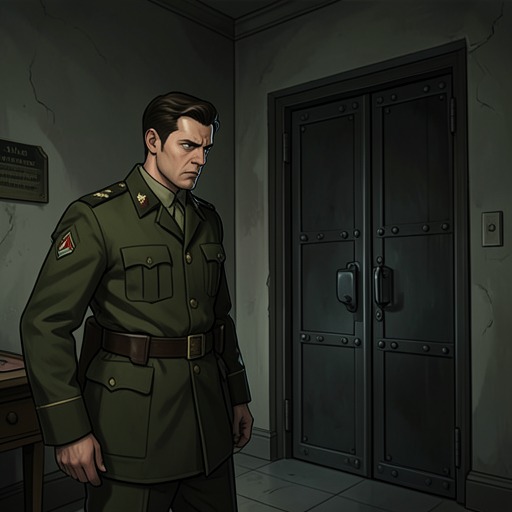
The Zone of InterestPaul Doll’s obsession with being “normal” is the refrain through which he tries to keep his identity intact while his conduct and surroundings expose its hollowness. He treats ordinary appetites as proof of innocence, political obedience as proof of virtue, and the suffering around him as something that can be reduced to practical outcomes. Yet the more insistently he claims normality, the more clearly the narrative sets that claim against coercion, mass death, and questions he cannot answer.
The Claim of Normality
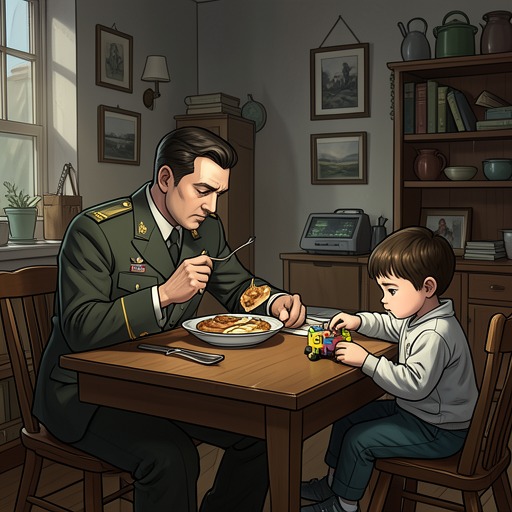
Doll makes the claim explicitly and repeats it as if repetition could settle the matter. After deciding that Hannah Doll must perform what he regards as her spousal duty, he insists, “For I am a normal man with normal needs.” Later, the thought returns in escalating form: “For I am a normal man with normal needs. I am completely normal. This is what nobody seems to understand.” The movement from a statement about needs to an assertion that nobody understands him reveals the defensive work of the refrain. Rather than examining his behavior, he presents himself as the misunderstood party.
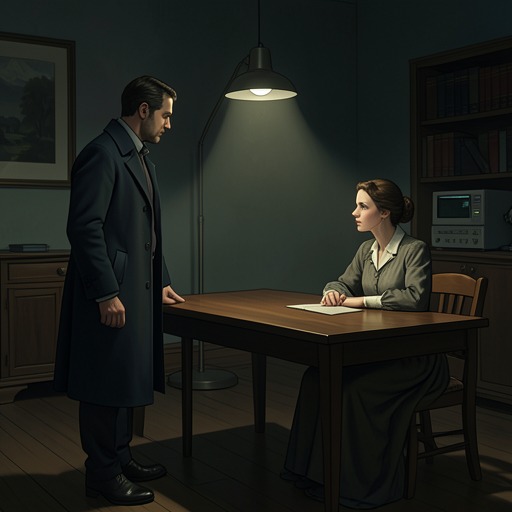
The claim is bound to a narrow idea of normality: Doll treats sexual entitlement, authority in the household, and the power to command as ordinary rights. Hannah’s smoking becomes a threat to his ability to discipline his wife and a worry about what servants might say. He imagines using brandy to put himself in the mood, expects Hannah to respond promptly, and plans to invoke Dieter Kruger if she resists. The threat turns a private relationship into an extension of Doll’s coercive authority. His insistence on normal needs does not soften that coercion; it recasts it as routine.
Political Obedience as Moral Cover
Doll applies a parallel logic to his public role. During a discussion about improving prisoners’ strength, Angelus Thomsen warns that the Kommandant cannot focus only on practical considerations and must keep sight of the political objective. Doll responds by invoking agreement with the Reichsführer-SS and declaring that there will be no pampering. His emphatic slap on the desktop and demand for toughness make severity sound like policy rather than a choice for which he is responsible.
His treatment of Der Stürmer shows the same self-serving reasoning in another register. Doll says he banned the publication in the camp because its lurid fixation on Jewish men’s supposed sexual predation damages antisemitism. He claims that the public should instead be persuaded by charts, statistics, and scientific evidence. The distinction is not a rejection of antisemitism: Doll objects to a method he considers ineffective, while presenting a more calculated propaganda as the reasonable alternative. His account of a display case of the paper in Dachau is no less revealing. He describes the resulting violence among prisoners, then shifts blame onto the Jewish prisoners and their alleged bribery, even claiming they were mainly persecuted by other Jews. The narrative lets his self-presentation as a hard-headed administrator reveal its own evasions.
At the Spring Meadow, Doll’s ideological defense becomes explicit. Faced with the killing ground, he says that he feels no false sentimentality and thinks instead of Germany and the trust placed in him by its Deliverer. He frames kindness to Jews as cruelty to Germans, then discards moral categories in favor of positive and negative outcomes. This is not evidence that he has escaped moral judgment; it is evidence of how he tries to replace it. The declaration of normal feeling sits beside a justification that turns the victims’ deaths into a political calculation.
Contradictions Made Visible
The narrative repeatedly places Doll’s justifications beside circumstances that contradict them. Boris Eltz recalls hearing that psychiatric patients in Königsberg were being killed to clear beds for men who had broken down while killing women and children in Poland and Russia. The reported chain of violence makes the word normal impossible to contain within domestic routine or administrative efficiency: even the perpetrators’ collapse is accommodated by further killing. Boris calls this an anti-eureka, an unwelcome recognition that the state is not as it should be. Doll’s refrain, by contrast, attempts to close off precisely that kind of recognition.
Doll’s division between his own conduct and another person’s becomes especially stark when he describes wrongdoing as the result of weakness in one case, while presenting his own actions as rectitude and indomitable strength. The contrast is not supported by a change in what he does; it is produced by the language with which he sorts people into moral categories. Normality becomes a privilege he awards himself, not a standard he applies consistently.
The Questions Beneath the Refrain
After waking in the Officers’ Club following the Reich Day of Mourning, Doll finds the remnants of a drunken banquet around him. He recalls the ceremony and its patriotic fervor, but the scene turns toward questions rather than reassurance. He asks why acts supposedly done for good smell so bad, why the men become brutishly drunk after the ramp, and why the meadow was made to churn and spit. He asks why rats are worth five bread rations, and why conception and gestation at the camp promise death for both mother and child. The questions gather physical details of the camp into a challenge to the justifications he has relied upon.
His image of snow turned brown condenses that challenge: the language of national ideals cannot keep the consequences clean. These questions do not amount to a clear repudiation of Doll’s role; the evidence presents them as questions he is left with, not as a confession or a decision to change. Their force lies in the collision between his earlier confidence and the material world that confidence has helped produce.
Narrative Significance
The refrain links Doll’s treatment of Hannah to his defense of the camp’s political violence without making those actions equivalent. In both settings, he turns power over another person into evidence of his own normality: at home, he calls coercive sexual expectation a need; at the camp, he translates cruelty into duty and outcomes. His language offers explanations, but those explanations repeatedly expose their limits.
The insistence that he is completely normal also gives the narrative a measure of the distance between self-description and observable conduct. Against his claim, it places the threat involving Dieter Kruger, the ban on pampering, his reasoning about antisemitic propaganda, his justification at the Spring Meadow, and finally his questions about the camp’s stench, drunkenness, vermin, and brown snow. Normality is not a settled fact about Doll but a story he tells himself—and the recurrence of that story makes the evidence against it harder to ignore.